



There’s a moment in most 1:1 meetings that’s become so predictable it’s almost funny. The manager pulls up their notes, opens with “So, how are things going?” and watches the employee shift uncomfortably before offering some version of “Good, yeah, things are good.”
Then comes the real work: the manager pulls information like they’re extracting teeth, walks through their checklist of questions, assigns next steps, and both people leave the meeting feeling like they just checked a box. The employee thinks, “Well, that was awkward.” The manager thinks, “I have twelve more of these this week.”
We’ve all been there. And we keep doing it because that’s how we were taught performance conversations should work: the manager drives, the employee responds. The manager asks questions, the employee waits to be asked. The manager owns the employee’s performance, and the employee...complies.
But what if we flipped the whole thing?
The Problem With How We’ve Always Done 1:1s
Let’s be honest about what traditional 1:1s actually create: compliance, not ownership.
When the manager drives the conversation, schedules the meeting, sets the agenda, and fires off questions, the implicit message is clear: Your performance is something I manage. Your job is to show up and answer my questions.
And employees pick up on that instantly. They show up prepared to respond, not to lead. They wait to be asked about problems instead of proactively raising them. They treat the meeting like a performance review instead of a developmental conversation. Over time, these sessions become transactional check-ins where the manager does all the heavy lifting and the employee does the minimum required to get through it.
The worst part? This approach burns out managers while simultaneously disengaging employees. The manager spends hours prepping for back-to-back 1:1s, trying to pull insights out of people who aren’t driving their own growth. Meanwhile, employees feel managed, not developed. They’re being done to, not built up.
As one leader I worked with put it: “I was spending 15 hours a week in 1:1s and still felt like I had no idea what was really going on with my team.”
What Continuous Performance Actually Means
Here’s where continuous performance comes in and why it requires a completely different approach to 1:1 conversations.
Traditional performance management treats performance as something you measure and control. You set goals, monitor progress, evaluate results, and course-correct when things go off track. It’s rooted in the old leadership model of planning, directing, controlling, and managing. That model worked in a world where work was predictable, tasks were repeatable, and compliance was enough.
But today’s world doesn’t look like that. Work is complex, fast-moving, and constantly shifting. Organizations need more than compliance, they need engagement, agility, and people who take initiative. And that requires a fundamentally different leadership model, one built on inspiring, enabling, facilitating, and developing people.
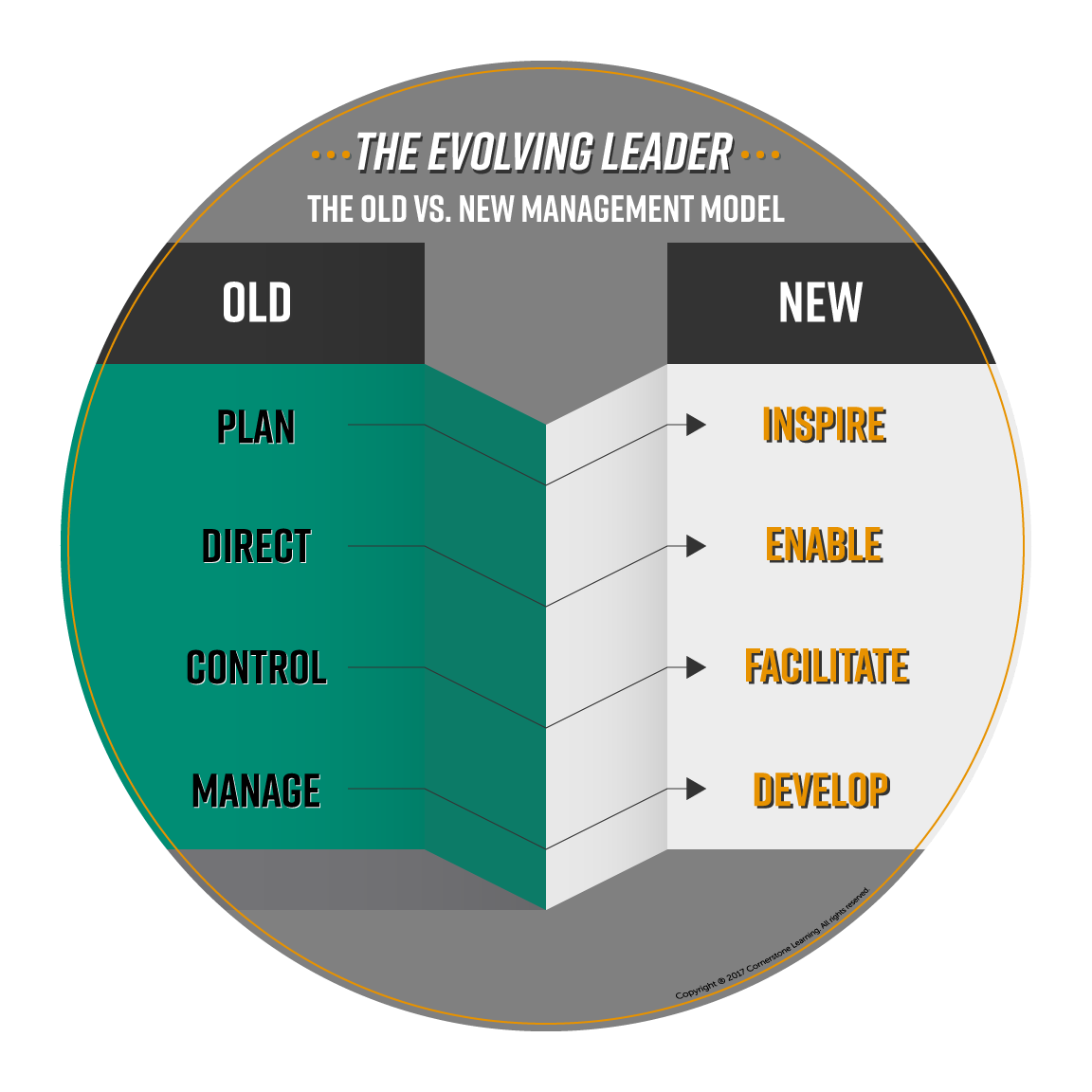
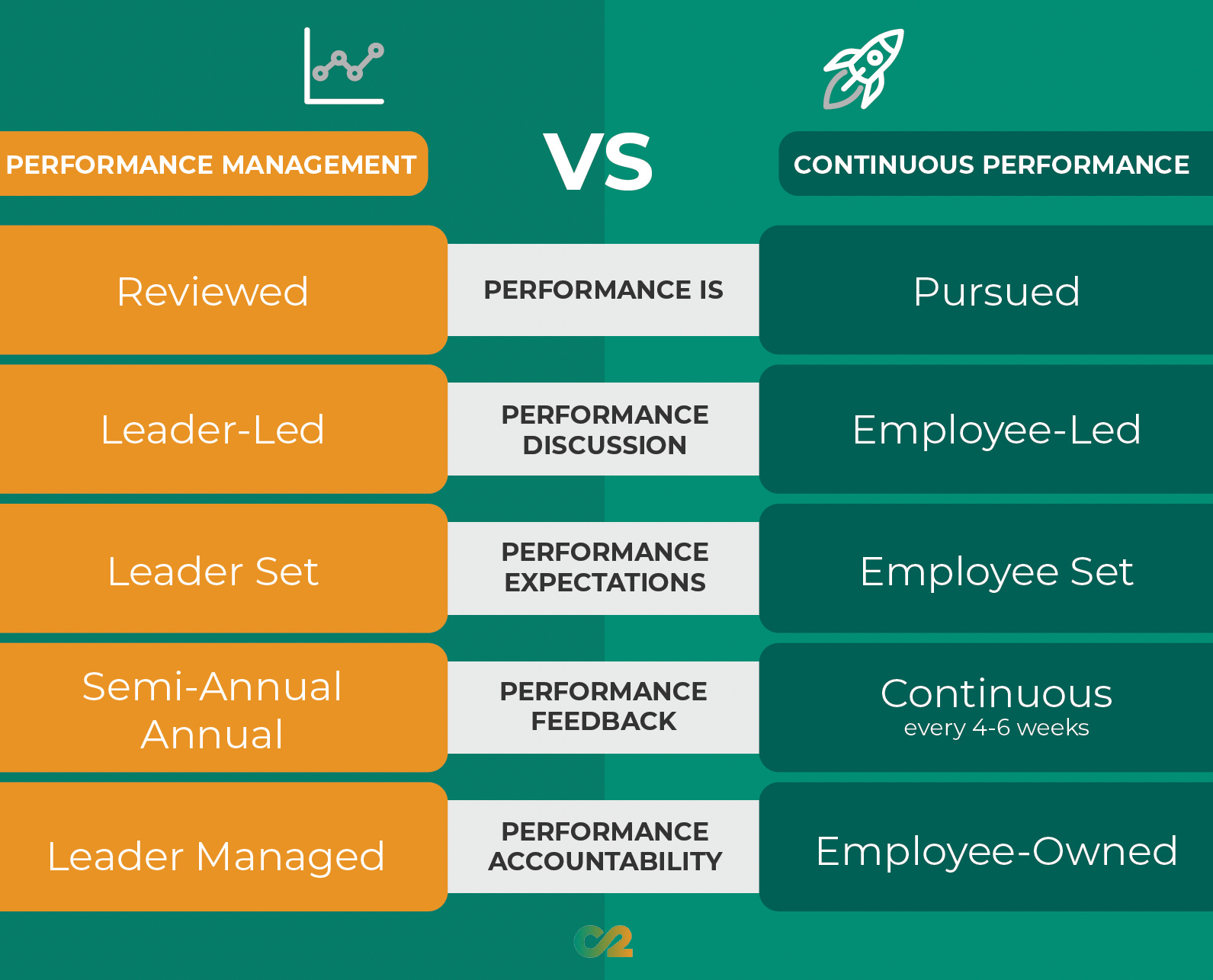
Continuous performance isn’t about managing performance, it’s about enabling it. It’s an ongoing conversation where goals connect to growth, feedback flows in real time, and performance becomes something people own, not something done to them. And if you’re serious about continuous performance, your 1:1s have to reflect that shift. It moves from periodically reviewing performance to continuously pursuing performance.
Which means the employee needs to be in the driver’s seat.
The Flip: What Employee-Led 1:1s Look Like
Here’s the shift, and it’s simpler than you think:
The employee schedules the meeting. The employee sets the agenda. The employee drives the conversation.
Not the manager. The employee.
Here’s what that looks like in practice:
The employee owns scheduling. They put the 1:1 on the calendar based on when they need it, not when the manager’s calendar has a gap. This sends an immediate signal: This is your meeting. You’re in control.
The employee comes prepared. Before the meeting, they work through a pre-meeting guide that asks them to reflect on questions like:
What’s working well right now?
What’s not working well or where am I stuck?
Where do I need support, resources, or clarity?
What progress have I made since our last conversation?
What are my priorities for the next two weeks?
The employee leads the conversation. They walk through their reflections. They raise the issues. They propose solutions. The manager’s role shifts from interrogator to facilitator and coach, asking follow-up questions, offering perspective, removing barriers, and helping the employee think through challenges.
The first time you do this, it feels weird. Employees sit there waiting for you to ask questions because that’s what they’ve been trained to do their entire career. You sit there resisting the urge to jump in and take over because that’s what you’ve been trained to do.
But stick with it. Because what happens over the next six months is remarkable.
What Actually Changes (And Why It Works)
When employees start owning their 1:1s, a few things happen; slowly at first, then all at once.
1. Employees Start Taking Ownership of Their Performance
When someone is responsible for articulating what’s working, what’s not, and where they need help, they can’t hide behind vague answers anymore. They have to think critically about their own performance. Over time, this creates a mindset shift: My performance isn’t something my manager tracks. It’s something I own.
One manager who made this shift told me: “It took about three months, but I started hearing my team say things like ‘I realized I’ve been avoiding this conversation with the client’ or ‘I think I need to get better at prioritizing.’ They weren’t waiting for me to point it out, they were diagnosing it themselves.”
That’s not compliance. That’s engagement.
2. Managers Actually Have Time to Lead
Here’s the irony: when you stop micromanaging 1:1s, you get time back. You’re not spending hours prepping questions or pulling information out of people. Instead, you’re showing up as a coach, helping employees work through the challenges they’ve already identified. You go from reviewing performance to actually pursuing performance.
The cognitive load drops significantly. And suddenly, you’re not drowning in 15 hours of back-to-back meetings where you do all the work. You’re facilitating conversations where the employee drives and you support.
As one director put it: “I went from feeling like a full-time therapist to actually being able to focus on strategy again.”
3. Problems Surface Faster
When employees are responsible for raising issues, they stop waiting for you to notice. They bring up roadblocks earlier because the structure of the meeting expects them to. You’re no longer playing detective, trying to figure out what’s going wrong. They’re telling you, proactively.
This is what continuous performance actually looks like in practice: real-time feedback, early problem-solving, and a team that’s constantly learning and adjusting instead of waiting for quarterly reviews.
4. The Relationship Shifts From Manager-Employee to Coach-Performer
When you stop asking all the questions and start listening, the dynamic changes. Employees stop seeing you as someone who grades their performance and start seeing you as someone who helps them grow. Trust deepens. Conversations get more honest. Development becomes real, not performative.
And here’s the kicker: this is what the new leadership model is built on. You’re not managing tasks, you’re developing people. You’re not directing behavior, you’re enabling initiative. You’re not controlling outcomes, you’re facilitating growth.
The Challenges (And How to Navigate Them)
Let’s be real: this doesn’t work overnight. And it doesn’t work without intentional leadership.
Challenge #1: Employees Don’t Know How to Lead the Conversation
Most people have spent their entire careers sitting in 1:1s waiting to be asked questions. The first time you say, “This is your meeting, what do you want to talk about?” they freeze.
The fix: Give them a pre-meeting guide. Make it simple. Ask them to reflect on 3-5 questions before every meeting and come ready to discuss. Over time, this becomes muscle memory.
Challenge #2: It Feels Awkward at First
For the first few months, employees will still default to waiting for you to lead. You’ll default to wanting to jump in and take over. Meetings might feel stiff or superficial.
The fix: Stick with it. It takes about six (6) months for everyone to get comfortable with the new rhythm. Results start speaking for themselves around month three, but full fluency takes twice that long. Patience is required.
Challenge #3: Leaders Undermine the Process
Here’s where this falls apart: when leaders don’t prepare, postpone meetings because they’re “too busy,” or fail to set clear expectations upfront. If you treat employee-led 1:1s like a nice idea but don’t actually support them, your team will revert to the old model instantly.
The fix: You have to model the behavior you want. Show up prepared. Prioritize the meetings. Reinforce the expectations early and often. Your team is watching how seriously you take this, and they’ll mirror your commitment.
The only time I’ve seen this structure fail is when the leader didn’t actually lead, they just expected employees to figure it out on their own without guidance or support.
The Gallup Numbers Don’t Lie
Here’s why this matters beyond just “better meetings.”
According to Gallup’s 2025 State of the Global Workplace Report, engaged employees are:
21% more productive than compliant employees
23% more profitable for the organization
25-65% less likely to leave (in low-turnover orgs)
41% less likely to be absent
10% better at customer satisfaction
Engaged employees take initiative, solve problems, align with the mission, and improve processes. Compliant employees follow the rules and do the minimum required.
Employee-led 1:1s don’t just change how meetings feel; they change who shows up to work. When people own their performance, they engage differently. They stop waiting to be managed and start leading themselves.
How to Start
If you’re ready to flip the script, here’s how to begin:
1. Explain the shift to your team. Be clear about why you’re doing this and what it will look like. “Starting next month, you’ll be scheduling and leading our 1:1s. I’ll still be there to support you, but this is your meeting now.”
2. Provide a pre-meeting guide. Give people structure. Ask them to reflect on what’s working, what’s not, where they need support, and what they’ve learned. Simple prompts make a huge difference.
3. Set the expectation that they drive. In the first few meetings, gently redirect when they default to waiting for you. “I’m here to listen, what do you want to focus on today?”
4. Commit for six months. This takes time. Don’t bail after two awkward meetings. Give it a full six months and watch what happens.
5. Model the behavior. Show up prepared. Prioritize the meetings. Reinforce the structure. Your team will follow your lead.
The Bottom Line
Traditional 1:1s create compliance. Employee-led 1:1s create ownership.
When you shift from managing performance to enabling it, something fundamental changes. Employees stop waiting to be told what to do and start owning their growth. Managers stop drowning in transactional meetings and start actually leading. Performance becomes continuous, not something you review once a quarter.
And here’s the beautiful irony: when you stop trying to control everything, you actually create more accountability, more engagement, and better results.
The new leadership model isn’t about planning, directing, controlling, and managing. It’s about inspiring, enabling, facilitating, and developing. Employee-led 1:1s are where that shift becomes real.
So flip the script. Let your people lead. And watch what happens when performance becomes something they own instead of something you manage.
What about you? Have you tried employee-led 1:1s? What worked? What didn’t? I’d love to hear your experience in the comments.
Super helpful, thank you!
The key to effective direct report engagements is the one on one sessions. This takes it to a whole new level. I have bene encouraging collaborative development and engagement. This takes to a whole new level! I will pass this a long. It may well be a very effective move for leaders and direct reports ready to move the the next level. Thanks!